
How Arrest Warrants Work in Victoria County
An arrest warrant is a written order from a magistrate. Texas procedure requires a complaint plus supporting facts before one issues. It lets an officer take the named person into custody. That is different from a bench warrant after a missed hearing, a city capias pro fine tied to an unpaid judgment, or a search warrant aimed at property. Victoria County's district courts handle felonies, while the County Courts at Law and lower courts carry other assigned jurisdiction. The issuing court sets the legal record. A Sheriff warrant line can route a question, but only the court decides a recall or disposition. The Victoria County Sheriff posts no public online arrest-warrant list, so call 361-574-8036 or ask the court named in the case.
What an Arrest Warrant Contains
Texas Code of Criminal Procedure Art. 15.02 sets the core fields. The paper must identify the person by name or description, state the charged offense, and carry the magistrate's signature. A full court file may hold more. Look for a complaint, a supporting affidavit, a bond order, a return, and any later setting or recall entry. What a public portal shows is not always the whole file. The Victoria County District Clerk, at 115 N. Bridge St., Room 330, keeps the district-court filings. Ask that office for the specific document you need rather than a general warrant list.
| Person or description | Identifies the person named in the order. |
|---|---|
| Offense | States the charge tied to the warrant. |
| Magistrate | Signature and court authority for issuance. |
| Return | Shows execution or attempted service, if filed and releasable. |
| Bond / setting | May be in a separate order or later docket entry. |
Victoria County's District Clerk's official page describes the court records and felony information that office maintains.
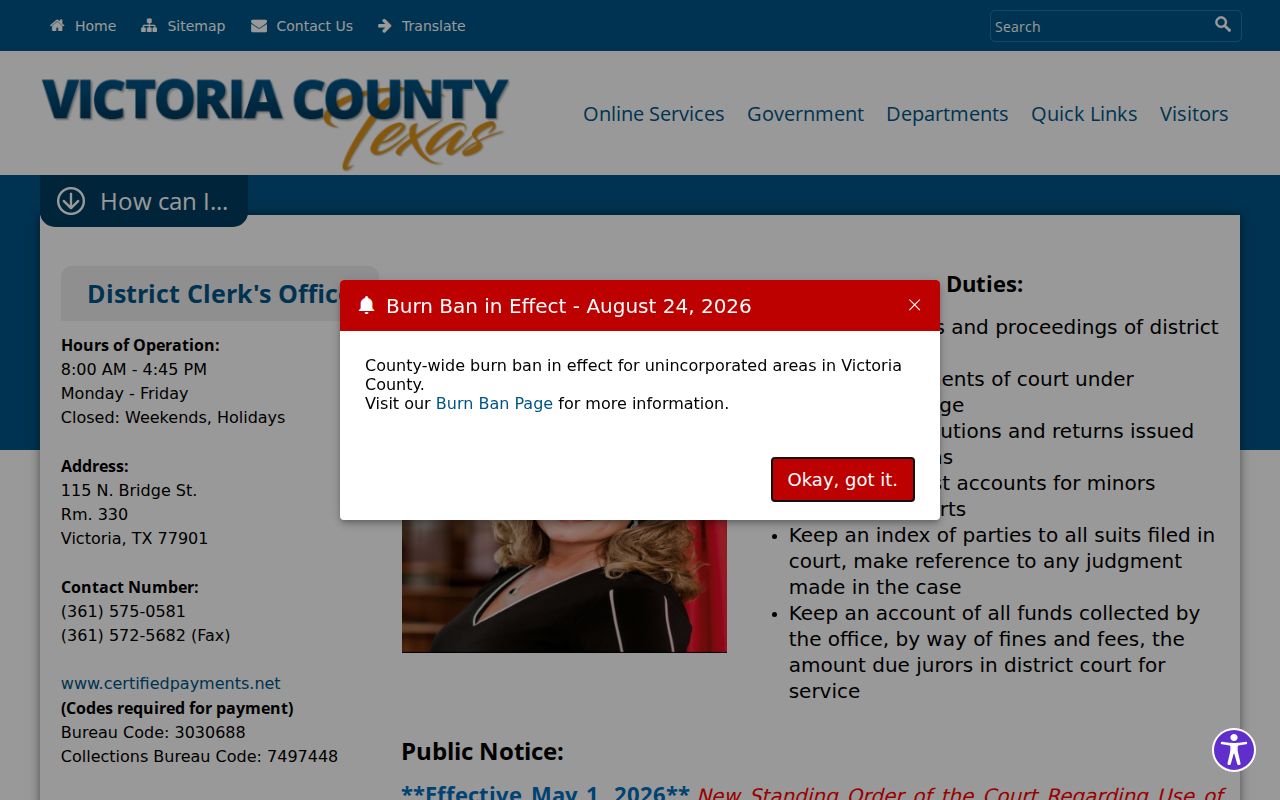
The records office behind that page takes document requests, so ask the Victoria County clerk for a specific filed paper by name.
What Texas Art. 15.02 Requires
The statutory fields help you read a released copy. They cannot tell you everything. A site cannot infer a local warrant-number format or promise that every filing is public. A magistrate's signature does not reveal whether an officer has served the order or whether the court later recalled it. The official Chapter 15 text goes further, covering statewide reach, execution, presentation before a magistrate, and access to an executed warrant. Read the article that matches your question. Treat the chapter as law, not as a Victoria County search interface.
How Warrants Get Served in Victoria County
Courts issue process; officers execute it. In Victoria County, the Sheriff and the constables carry service roles, and Victoria Police handles city matters. No county page publishes a table assigning every warrant type to one agency. One warrant can move through several offices. Constables serve warrants and civil papers, execute judgments, and perform other duties. A city citation may run through Municipal Court instead. Federal process belongs to federal courts and agencies, never a county roster. The county's Constables page describes each precinct and its service duties for Victoria County.
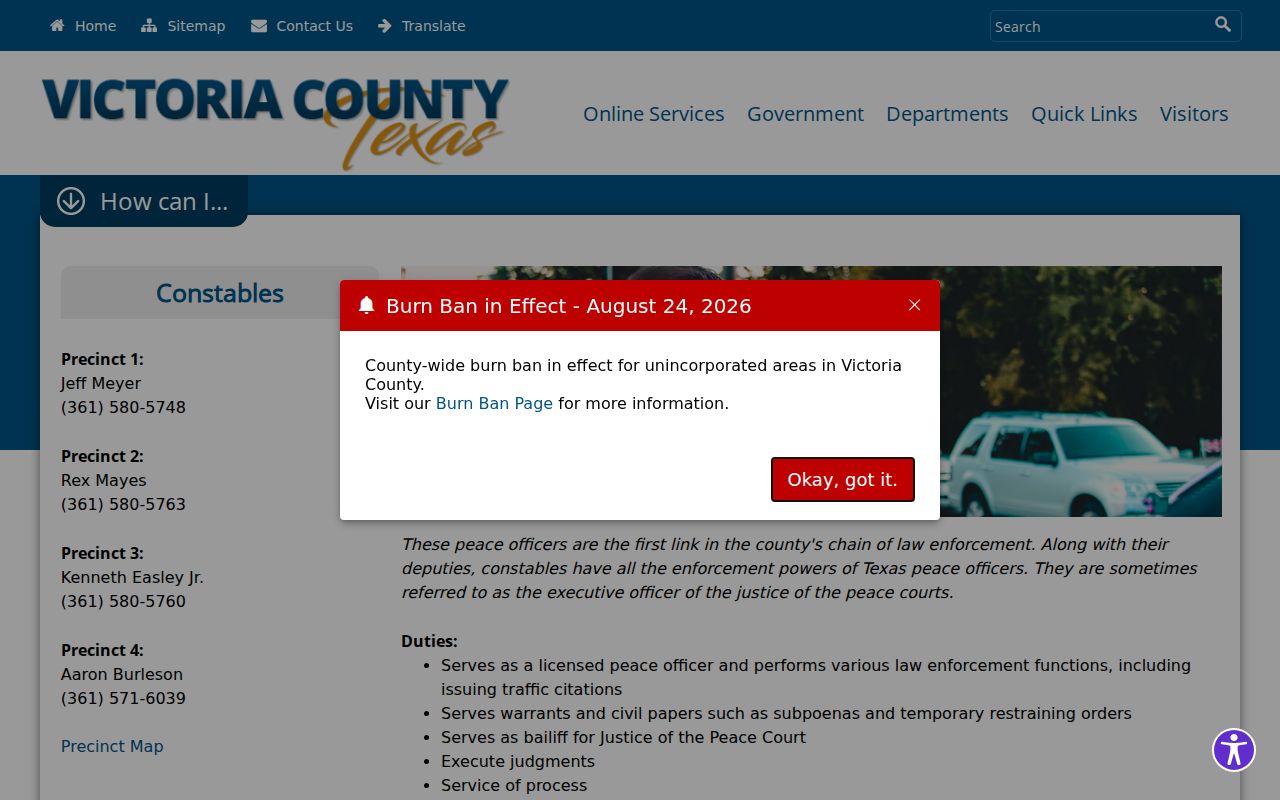
A Victoria County constable may serve the paper. That authority does not make the constable the record keeper for every warrant or the official who can recall it.
Serving Arrest Warrants in Victoria County
Texas Art. 15.06 gives an arrest warrant statewide reach, subject to the rules that apply. Chapter 15 also governs execution by peace officers and presentation before a magistrate after arrest. The Sheriff, a constable, city police, or another authorized officer may each have a role. No Victoria County page publishes a universal service schedule, a booking-to-release time, or a walk-in surrender procedure. Call the Sheriff warrant line and the issuing court before appearing at 101 N. Glass St. A custody question belongs with the jail number, 361-574-8044. If the warrant may be federal, contact the Southern District of Texas, Victoria Division, or the U.S. Marshals rather than assuming county jurisdiction in Victoria County.
Victoria County Arrest Warrant Record Route
The court record and the operational status can sit in different offices. The Sheriff's dedicated line is 361-574-8036. The District Clerk handles district and felony filings at 361-575-0581, and the criminal coordinator at 361-578-8756 takes setting questions. For county-court and County Courts at Law records, call the County Clerk at 361-575-1478. Need a copy of an executed warrant or a return? Request it from the court or agency that holds it. The Victoria County Sheriff's Records Unit accepts written public-information requests, but judicial records often follow Texas Rule of Judicial Administration 12 and the court's own process. The Texas courts open-records policy explains that Rule 12 distinction. Ask the office holding the document which route applies.
Arrest Warrants, Summonses, and Bench Warrants
These papers all demand a court response, yet they start from different legal points. An arrest warrant authorizes custody after magistrate review. A summons simply directs a person to appear. A bench warrant usually follows a missed setting or a court's direction. A capias pro fine ties to an unsatisfied justice or municipal judgment. When you check your status in Victoria County, name the specific paper rather than just saying "warrant."
| Process | Why it is issued | First question |
|---|---|---|
| Arrest warrant | Complaint and magistrate action | Which court issued it? |
| Summons | Notice to appear | What date and court are listed? |
| Bench / FTA warrant | Missed setting or court direction | How does the court reset or recall it? |
| Capias pro fine | Unsatisfied justice or municipal judgment | What payment or hardship process applies? |
Executed and Unexecuted Records
Victoria County readers looking at warrant records should know that Article 15.26 draws one clear line. Once an arrest warrant has been executed, the warrant and its supporting affidavit become public, subject to exceptions. Records that are unexecuted, sealed, investigative, juvenile, or tied to a search warrant can be treated quite differently. So the law behind an arrest warrant does not open every document in every case to the public. A search warrant is a separate process of its own, one centered on search and seizure rather than a person's arrest status. Chapter 18 sets the rules for that process, including how affidavits and execution must be handled. The Texas Chapter 18 source lays out those search warrant rules apart from the Chapter 15 arrest warrant provisions.
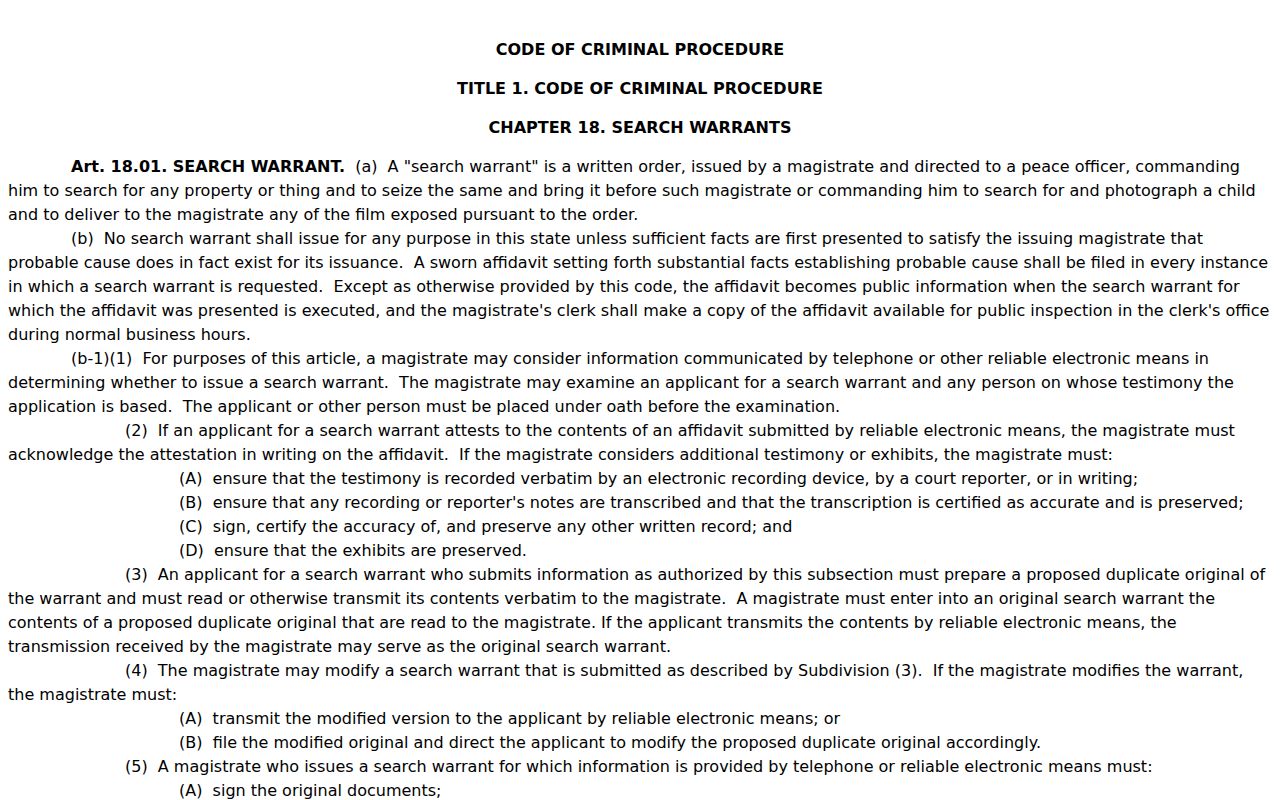
If access is limited, ask the Victoria County clerk or agency for the exact record you want and the rule it relies on.
Handling an Arrest Warrant in Your Name
Call a lawyer and the issuing court first. Skip the jail trip until you talk to them. Ask what the court requires, whether that means bond, a setting, or another step. Ask how a recall order gets confirmed. Victoria County makes no countywide walk-in surrender promise and sets no fixed bond amount.
Do not assume a phone call, bond receipt, or online result resolves an active arrest warrant. Confirm the next step with counsel, the issuing court, and the Sheriff when needed.
The Victoria County warrant line is 361-574-8036. The jail answers separately at 361-574-8044. A lawyer can weigh whether a motion to recall or quash, a court appearance, or another route fits the case. For a full county contact map and steps by case type, see the Victoria County warrant records overview.
Victoria County Arrest Warrant Access
Texas Government Code Chapter 552 covers many government records. Courts use Rule 12 and judicial-record rules instead. Family Code Chapter 58 shields juvenile records, and an office may redact, clarify, or withhold material under a statute or court order. A Victoria County Sheriff request should name the specific record, agency, court, and date range. For a court filing, contact the clerk or judge. The sheriff posts no public arrest-warrant roster and no countywide count.